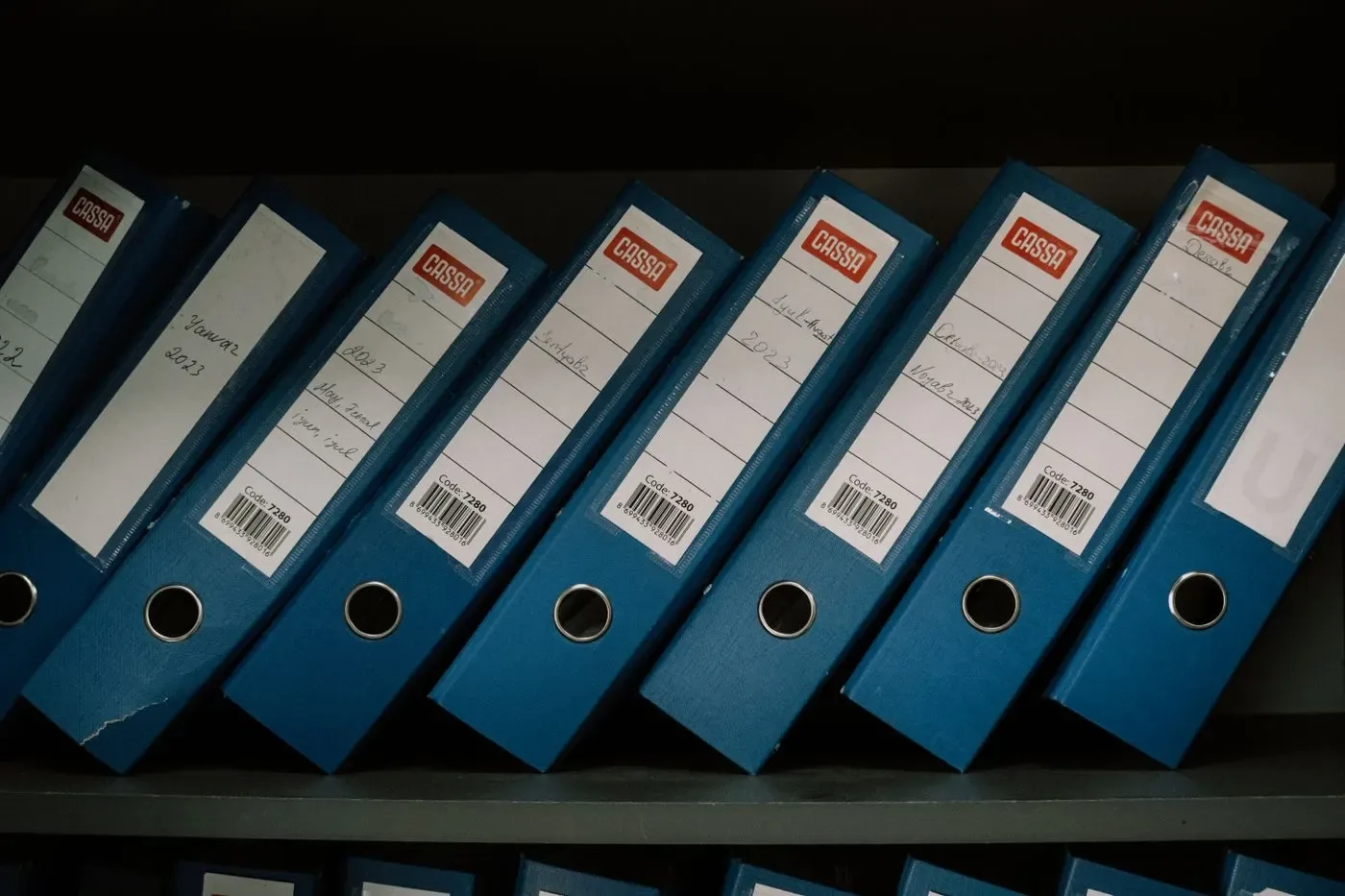
No owner wakes up thinking about their minute book. They think about it the day a buyer asks for it, a bank requires it before financing, or a partner demands access to it.
That is when they discover it has not been kept for eight years. And that is when the transaction stops.
What a minute book actually contains
It is not a book of meeting notes. It is the company’s entire legal memory.
Constituting documents
Articles of incorporation and every subsequent amendment, certificates issued by the authority, by-laws.
Resolutions
Decisions of the directors and shareholders: appointments, share issues, dividend declarations, approval of financial statements, authorization of borrowings and major contracts.
Registers
Register of shareholders, register of directors and officers, register of share transfers, register of securities issued.
Share certificates
Issued, signed and entered in the register. Their absence is the most frequent defect we encounter.
Public filings
Annual returns and updating declarations, including those on ultimate beneficiaries.
Why it blocks a transaction
A serious buyer starts due diligence with the minute book, because it answers the one question that comes before all others: who actually owns this company.
If the shares were never issued, nobody officially owns it and there is nothing to sell until the situation is corrected. If a transfer was never recorded, the chain of ownership is broken.
Retroactive correction is possible, but it takes weeks, costs money and happens under the pressure of the transaction timetable. That is the worst moment to discover it.
The five most frequent defects
We find them in most SME files that never had corporate follow-up.
Shares authorized but never issued. Share certificates missing or unsigned. No resolution approving financial statements for years. Directors who resigned without a resolution, still listed in the public registers. Dividends paid without a resolution, exposing them to recharacterization.
The link with public registers
The minute book is the internal record; the public registers are its reflection. The two must match.
A Quebec company files an annual updating declaration with the Registraire des entreprises. A federal company files an annual return with Corporations Canada, and the Quebec declaration as well if it operates in Quebec.
Failure to file leads to striking off. A struck company cannot contract validly, and its revival joins the list of things to fix before a sale.
Keeping it without thinking about it
Routine upkeep is little work: an annual approval resolution, the public filings, and an update on every structural decision.
It is precisely the kind of follow-up that gets lost when it is nobody’s job. It is also why several companies fold it into an outside general counsel arrangement rather than remembering it once a year.
Frequently asked questions
Is a minute book mandatory?
Yes. The law requires every company to keep books recording its articles, by-laws, resolutions, and the registers of shareholders and directors. Their absence does not void the company, but it puts it in default and blocks any transaction.
What if the minute book was never kept?
It is reconstituted retroactively: missing resolutions are drafted, decisions taken are documented and the registers are brought up to date. The exercise is longer and costlier than routine upkeep, and some older decisions become hard to reconstruct faithfully.
Is an electronic minute book valid?
Yes, provided the documents are kept reliably, remain accessible and their integrity is preserved. The medium does not matter; traceability does.
Who may consult the minute book?
Shareholders have a right of access to certain registers, notably those of shareholders and directors. That right becomes central in a conflict: a refusal of access is often the first sign of an oppression file.
The best time to bring it up to date
It is now, not the day a buyer, a bank or a partner asks for it. Bringing it up to date calmly costs a fraction of an emergency correction under a transaction timetable.
Going further: incorporation and structuring, due diligence, and the shareholder agreement.
Book a consultation
Lawyer, member of the Barreau du Québec since 2014, founder of MEKA AVOCAT. This text sets out general legal information: it describes rules that apply broadly, not the answer to one particular case, and does not replace advice on your situation.